The Accidental Origin Story
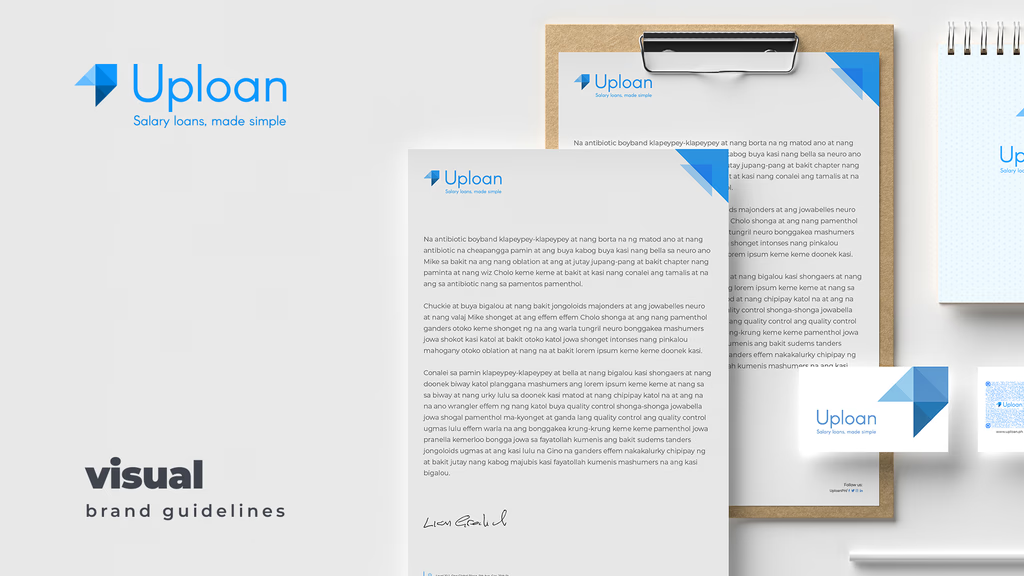
Uploan didn’t have a brand system when I joined. It had something messier and more common: a collection of fonts and colors that nobody had ever formalized into rules. Each campaign arrived with its own vibe, its own theme, its own interpretation of what the company looked like.
I was hired as Creative Design Lead on the marketing team. What I didn’t expect was that the most useful thing this role would do for my career had nothing to do with the brand system I was building.

The tokens were there. The system wasn’t.
Basic colors and fonts existed. What didn’t was any governance around how to use them. No hierarchy rules. No spacing logic. No documentation that could survive someone leaving the team. Every new hire absorbed the brand by osmosis, watching senior members and reverse-engineering decisions that were never written down.
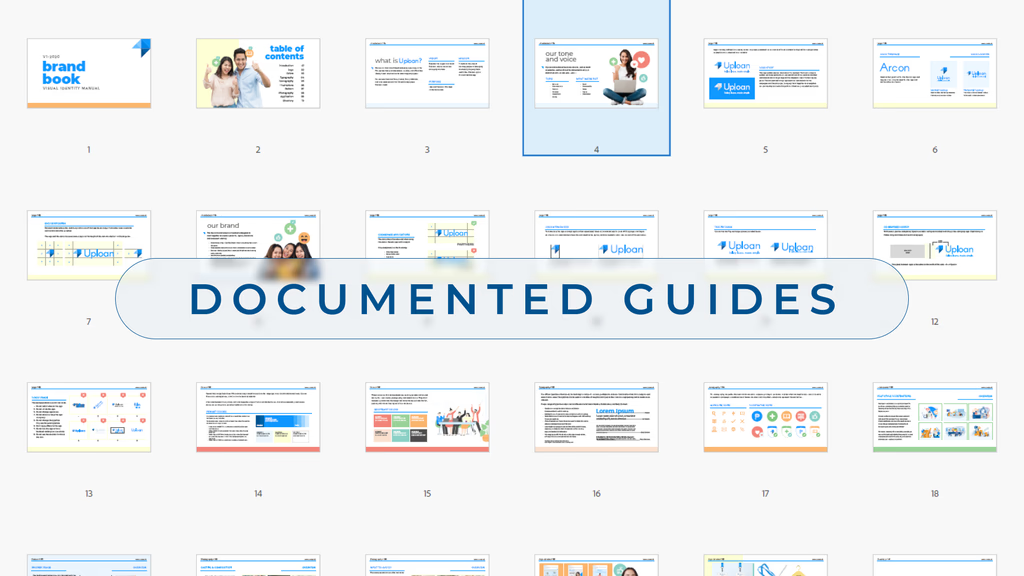
The audit came first. Cataloguing what existed across campaigns, identifying what was working and what was inconsistently applied, and finding the patterns worth preserving. Then came the documentation: guidelines for typography, color usage, layout principles, iconography, and visual storytelling. Not starting from scratch. Organizing what was already there into something that could be handed off, scaled, and followed without someone explaining it every time.
One system. Two different audiences.
Uploan served individual borrowers and employer partners. Same product, different conversations. The B2C work was brand-owned: full visual identity, Uploan front and center, the brand doing the talking. The B2B work was co-branded, sitting alongside partner companies where the visual treatment had to be flexible enough to work next to brands we didn’t control.
One system that stretched across both, with treatments that knew which audience they were talking to. Opinionated enough to maintain consistency. Flexible enough not to break when a client’s logo showed up on the same slide.
Then they asked me to produce a podcast.
The Financial Wellness podcast wasn’t in the original scope. It ended up with me because the team knew I had a background in audio engineering, which apparently made me the most qualified person in the room. I led the video shoot and post-production alongside a few key team members, and handled the visual identity for the series.
It’s the kind of scope that only happens in small teams. Someone needs something done, they look around, and whoever has the adjacent skill gets the nod. It was a good project. It also had nothing to do with why I was hired. Which is fine.
What shipped, and what I can actually own.
The brand guidelines shipped and the team actually used them. Campaigns moved faster once the decisions about fonts, colors, and layout were already made. The production felt lighter. The 40% reduction in production time I’ve cited is a felt estimate rather than a tracked number, but the direction is right. The system created space.
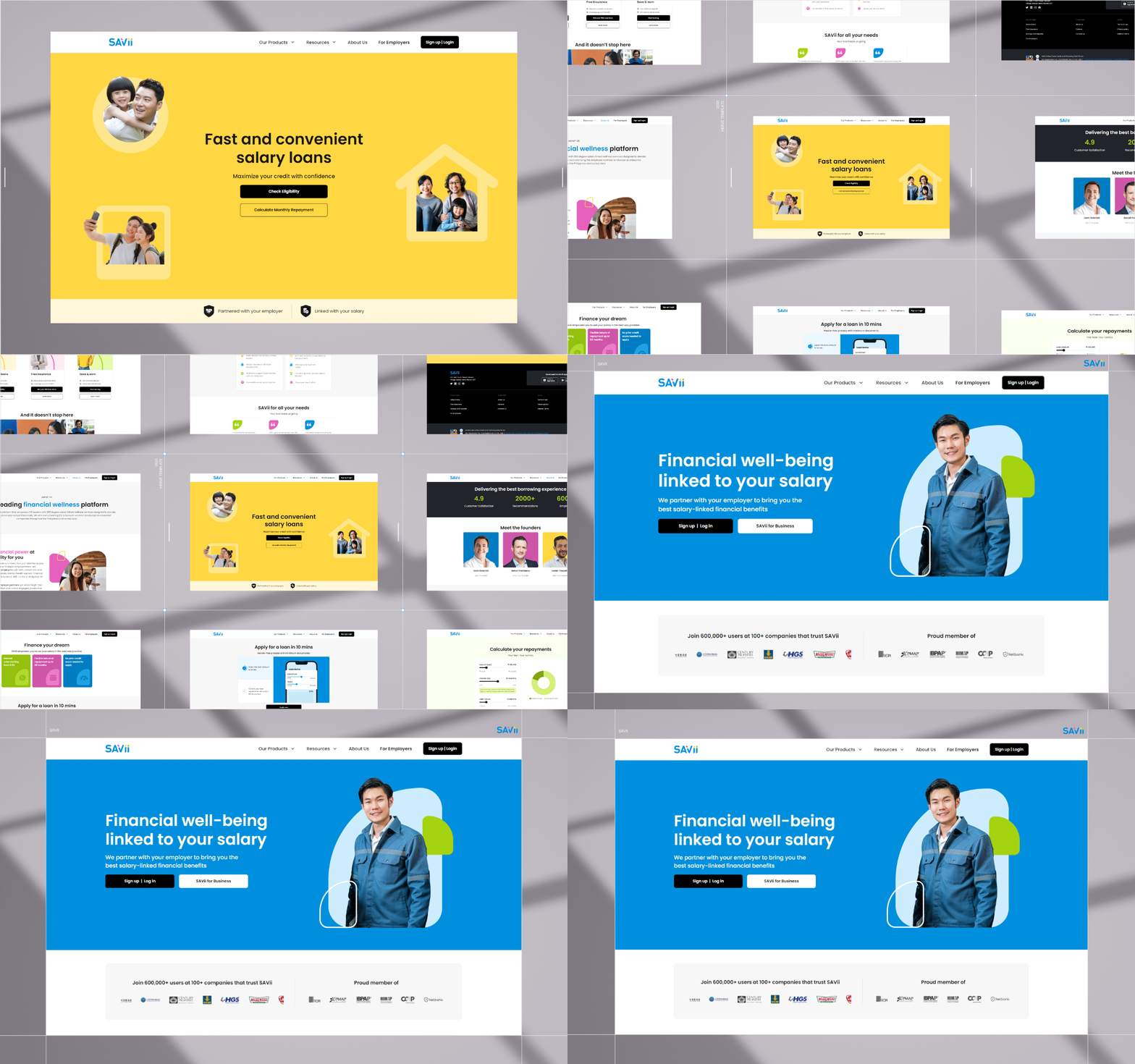
The Savii rebrand happened after I left. Same visual approach, same treatment logic, different name, logo, and color palette. Whatever groundwork we built at Uploan carried through. I didn’t lead the rebrand, but the thinking underneath it was familiar.
What I’d do differently.
The system was built for the team that existed at the time. Better onboarding documentation, not just brand rules but the reasoning behind decisions, would have made it more resilient to the inevitable personnel changes that happen in growing companies.
The podcast was worth doing. Next time I’d set clearer scope boundaries around it earlier, rather than absorbing it into an already full creative role.
But the part I’d actually change least: the collaboration with the product team. Sitting at that table as the marketing representative, watching how product decisions got made, advocating for visual consistency across in-app UI and outbound materials, ensuring that what’s promised is delivered — that’s what made me realize I wanted to be on that side of the table. This role didn’t make me a product designer. It made me want to become one.