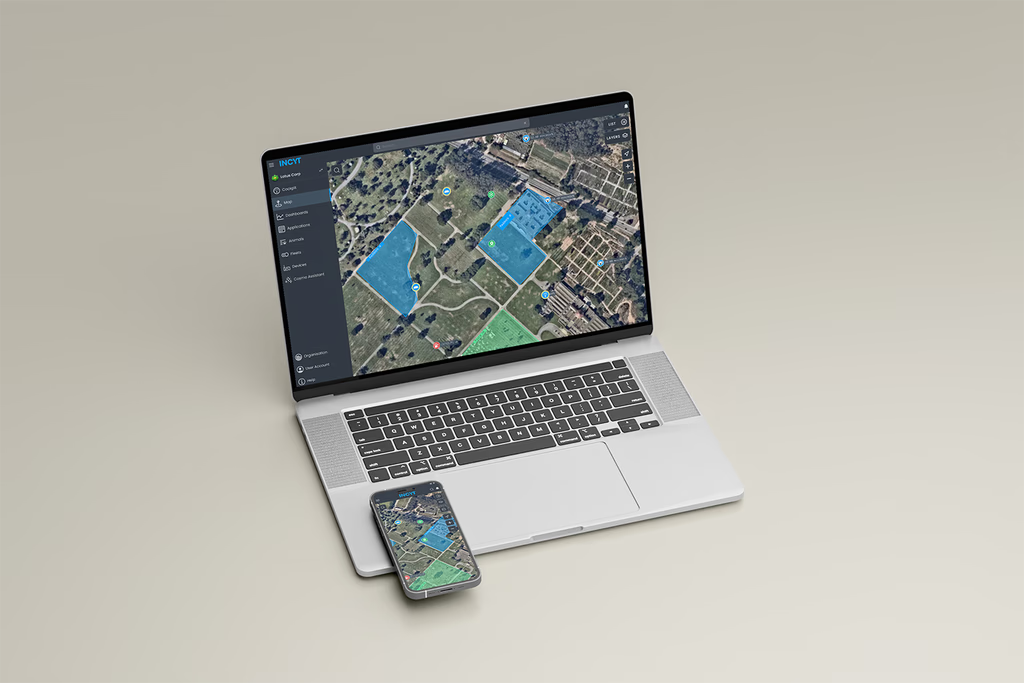
Giving the Archive a Homepage
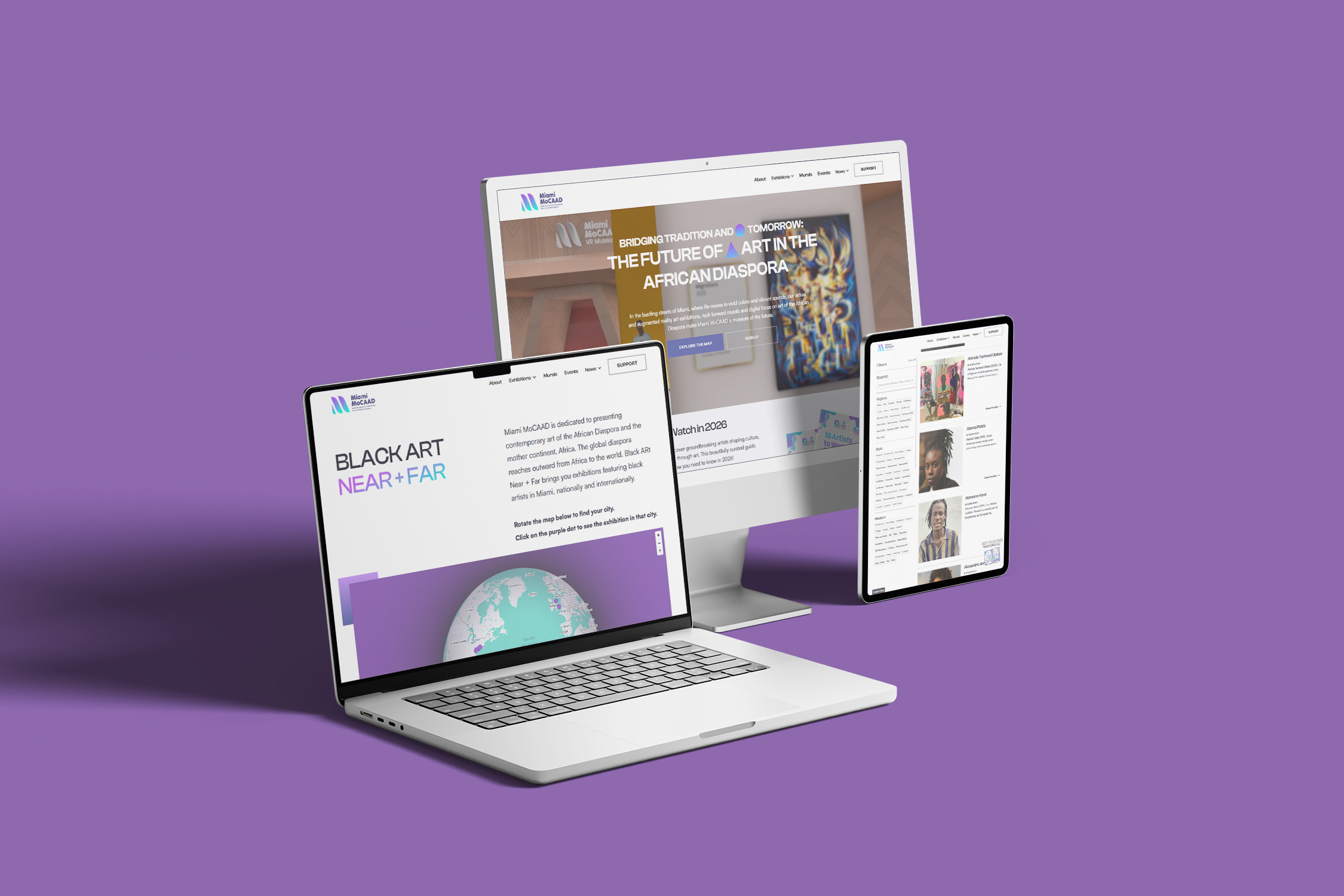
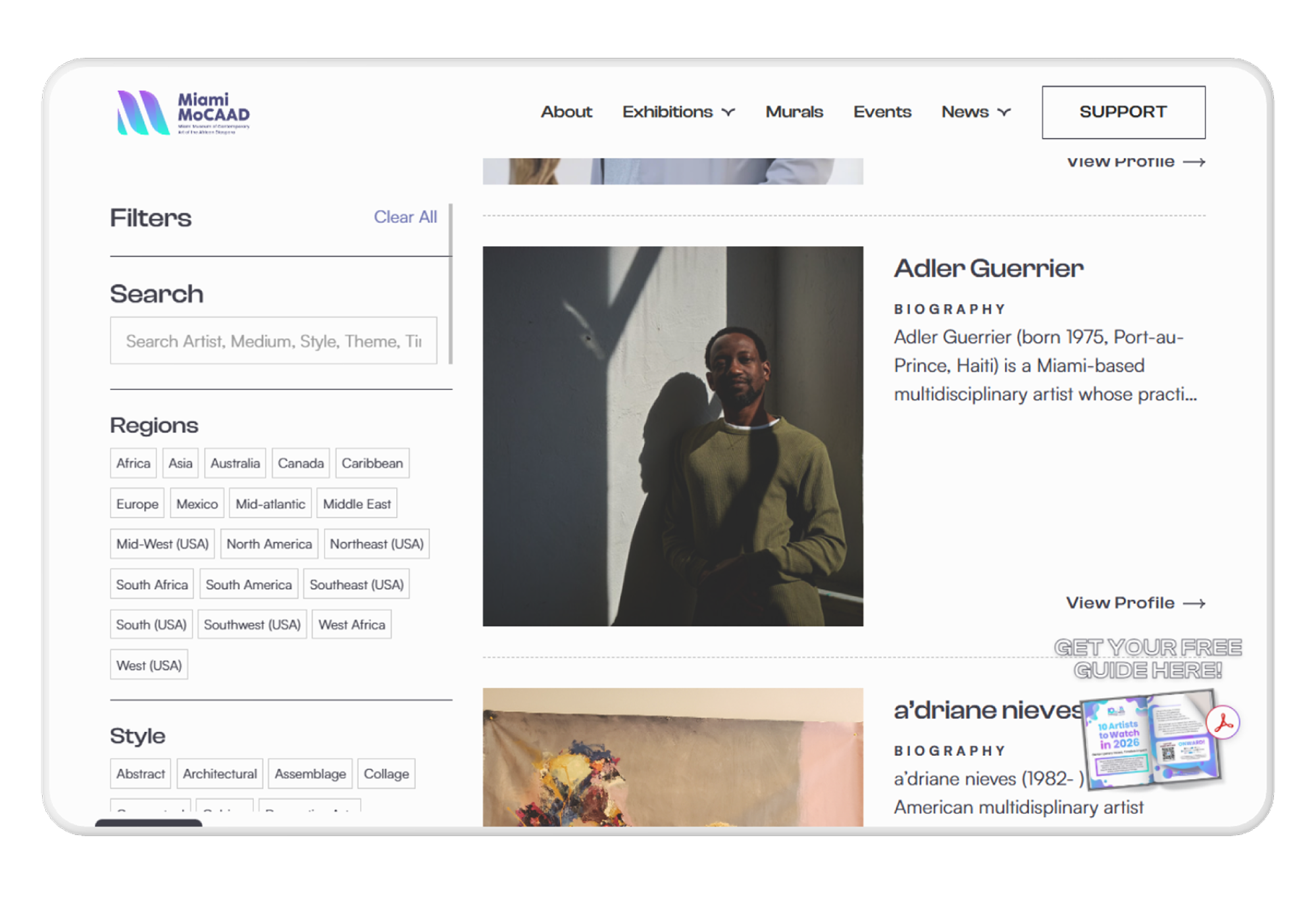
Miami MoCAAD is a digital-first museum platform documenting contemporary art from across the African diaspora — artists, artworks, exhibitions, global initiatives. I came on as a Webflow developer and designer to help maintain and grow the platform. Not to audit it. The audit happened because it needed to.
The platform was growing.
The foundation wasn’t.
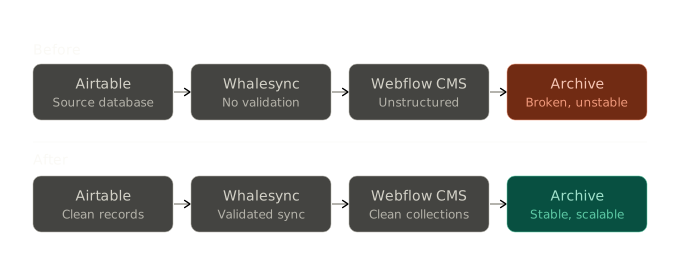
By the time I joined, the site was live and expanding, but quietly falling apart underneath. The content pipeline ran through three tools: Airtable as the source of truth, Whalesync syncing records into Webflow, and Webflow CMS powering the public site. Over time, that chain had accumulated serious structural debt. Duplicate records. Conflicting slugs. Orphaned pages with no internal links. Broken relationships between artists and their work. Nobody put bad data in on purpose, the pipeline just had no guardrails, and content volume eventually exposed everything.
Understanding the system before touching it
I mapped the full pipeline first. In a multi-tool system with collections spanning artists, artworks, exhibitions, geographic metadata, and media references, the wrong fix in the wrong place makes things worse. I needed to understand how records connected before I could know what was actually broken versus what just looked broken.
The highest-risk issue was slug conflicts. Multiple pages competing for the same URL, no canonical signals, and a Webflow CMS that didn’t enforce uniqueness on sync. Every conflicting slug was a coin flip for which version search engines would index and which internal links would resolve. I standardized naming conventions across collections, removed duplicates, repaired broken references, and tightened the sync logic to prevent conflicts from re-entering on future updates.
While doing this, I started learning technical SEO properly. Not from a course, but from the actual problems in front of me. Broken internal links. Orphaned pages search engines could find but users couldn’t reach. Metadata inconsistencies across collection templates. I fixed these incrementally, keeping the CMS stable throughout and continuously bumping up the SEO score which churned out more organic searches.
The last piece was the pipeline itself. Since Airtable was the source of truth, garbage in meant garbage out to Webflow. I added validation before sync — slug conflicts flagged, relationships verified, clean data only. This ensures data integrity between what visitors read and what’s actually being written by the team.
What shipped
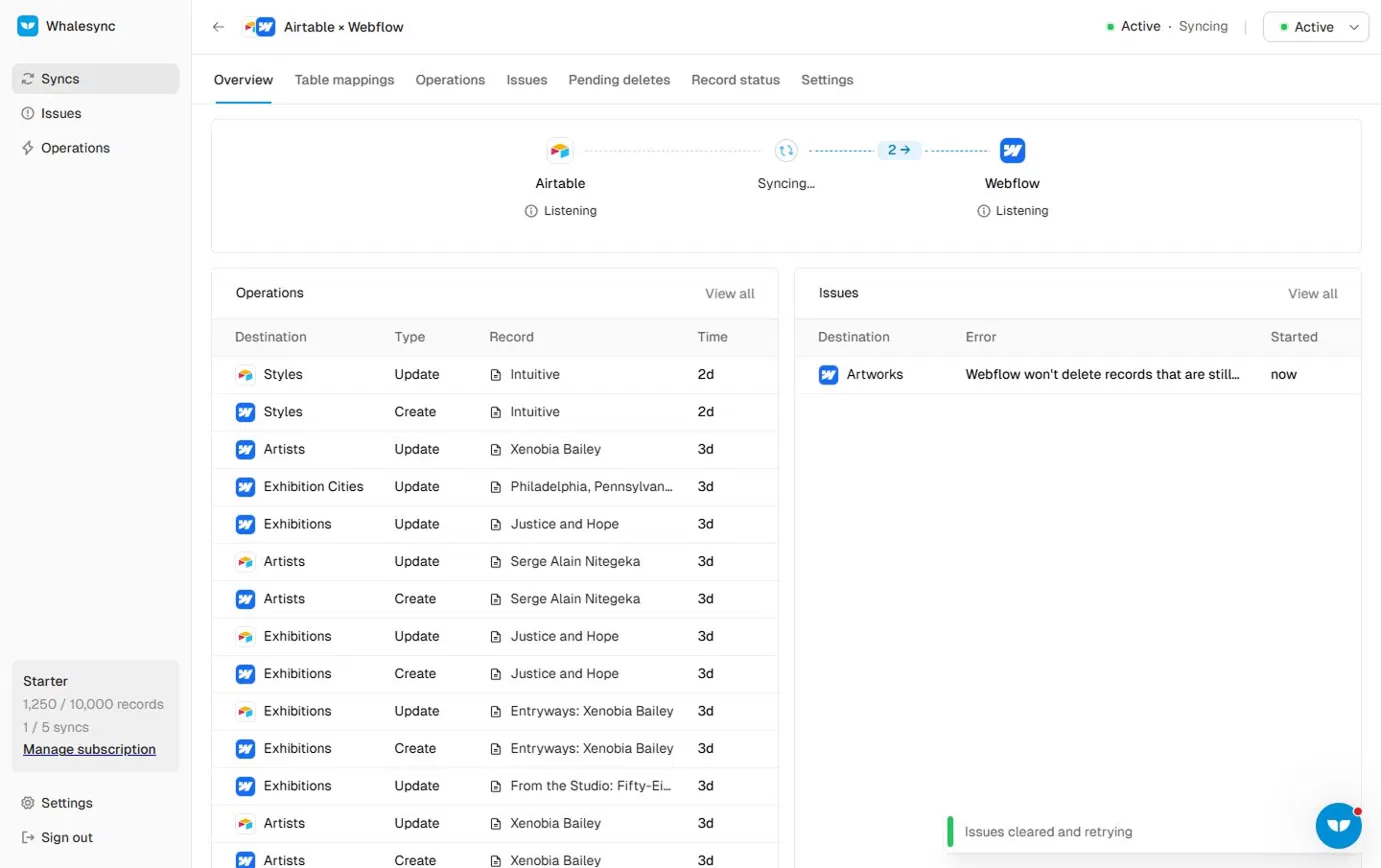
The duplicate and conflicting records were removed. Slug structures were standardized across all major collections. Internal links between artists, artworks, and exhibitions among other things were repaired. The sync pipeline had guardrails it didn’t have before and we were alerted if there were any issues that needs fixing.
The archive kept growing after I left. That was the point.
What I’d do differently
I’d push for content governance documentation earlier. The pipeline issues accumulated partly because there were no shared conventions for how records should be named or structured, no style guide for content editors, no slug format rules, no relationship standards, no documented instructions on how to add more content since we had a revolving door of writers. A simple reference doc would have prevented a significant chunk of the cleanup work. Systems are only as clean as the people using them understand them to be.